
The Art of Parenting: Lessons from a Creative Career
In this exclusive written-only episode, Rick Stringer, an artist, photographer, and consultant, shares his journey from being an airbrush artist to a VP at a design firm, and how he balanced his career with family life.
Rick shares insights on parenting, including the challenges of raising children and the importance of shared activities like martial arts. The conversation also touches on Rick's experience with podcasting, the growth of his audience, and his support for his LGBTQ+ child. He concludes with reflections on his journey and future aspirations.
Rick's Journey: From Artist to Consultant
Kaila:
Let's dive into your journey. Which came first for you? Working for yourself or becoming a dad?
Rick:
I have to say, working for myself since I was working for myself long before I became a dad. I started out my career as an airbrush artist back in 1984. And that was in Los Angeles.
From there, I moved to Chicago in 1985. I hooked up with a small design firm there and worked out a really nice deal with them where I worked 20 hours a week for them, and then the rest of the time I could use the studio for my freelance work. And that worked out great for them and for me.
In 1985, things were very different than they are today. That was back in the days where we had to do key lines and work with a stat camera and all that analog stuff that we don't have to do today. But sitting on one of the desks was a little Macintosh computer.
Those had just come out the year before. And that was my introduction to the Mac. So I started. Back then, the Mac couldn't do a whole lot; that's what I was, so I didn't take a whole lot to learn it.
My wife and I didn't love the Chicago area. I liked to visit there, but it felt like LA, only we had snow, too. I have a brother who lived near Grand Rapids, and he convinced me that there was a place for my work there. And so we moved to Grand Rapids.
For a short time, I worked for the newspaper there, but then I found Michael VanderWaal, Inc. I worked out the same kind of deal with them that I did with the one in Chicago.
I was working for him 20 hours a week, and the rest of the time I could use the studio, including his little Macintosh computer that he had there. So it carried on that training.
That evolved into full-time work, and eventually, I was a VP for that company. I was there until 1992. Michael Vanderwaal was an excellent designer, a questionable businessman. And he made some mistakes, and I could kind of see the handwriting on the wall that we were going to be downsizing, that the company was in trouble. So I started looking for work. And my wife saw this ad in the paper and said, “Look at this, it sounds like you.” I looked at it, and it really did describe me at that time in my life. And then I saw where it was. It was in Traverse City, and I said, “Traverse City?” I had sworn I'd never live farther north than Grand Rapids.
I talked with some other people that I knew in the area who knew of Corbin Design, and they convinced me that it really was a good fit for me. So I sent my portfolio up to Corbin and my resume, and it wasn't long later they called me up, had me come up there. They put me up at the best hotel in town and offered me a job on the spot. And so I started out there as a production artist, but after a few years, that evolved into the production manager and then ultimately VP there. And so I was with Corbin Design for 28 years.
Balancing Work and Family Life
When I lived in Grand Rapids, that's where my son was born. And so that's when being a dad became a big part of it. So my wife and the mother of my kids was a neonatal nurse. And that was good and bad for me because I knew that I could trust her advice when it came to the kids, but she also would scare the heck out of me when it came to the kids, and then they're. She came from a world where all kinds of bad things could happen. Especially when she was pregnant, it was a little scary. But it all worked out.
Neil was born in ‘89, so he was three years old when we moved to Traverse City. And he really doesn't remember Grand Rapids. Traverse City is where he grew up, and what my wife did in the early years was she left the hospital, and she started doing a job that she could do from home, where she would read charts.
It was just a way to make some money, but she could be home with the child and be there so that I was able to keep doing my work. And that worked out pretty well.
In Traverse City, with Corbin Design, one thing that was always really great about this company was that it was family-oriented in that, unlike many design firms that are out there in the world, we always tried really hard to keep people as close to 40 hours a week as possible. So I wasn't doing the 60, 80 hours a week that a lot of design firm people would do, which was great, especially with family.
Next year, ‘93, my daughter Rowan came along. So I didn't realize, you know, it's like, I knew how much having one child would change your life. I didn't know how much having a second one would change everything. Suddenly, everything got a lot more complicated, having to deal with a boy and a girl, and you've got this kid who's four and dealing with a baby. It was definitely more complex. But we managed to get through, and they did great.
When Neil was in kindergarten, there was a woman in my building where I worked who was coaching soccer with her son. And she asked me if Neil wanted to do YMCA soccer, and if I wanted to be her assistant coach. I really didn't know anything about soccer other than what I had done in gym class, but at that age, you don't need a whole lot. You just got to herd them. So, I did that, and then the next year she decided she didn't want to do it anymore. So then I became a coach. And I was my son's soccer coach all the way through sixth grade when he and I both decided we had kind of had enough of soccer. But we still wanted to do something. My daughter also played soccer, and I helped with that team, but I only coached my son's team. But with my work schedule, it was really nice that I was only working 40 hours a week. I could get out of there at a decent time and take care of practice and the kids and all of that. It was a great thing to do with my kids. But after the soccer, we said, well, what are we going to do?
Shared Activities: Bonding Through Martial Arts
In my younger years, I had been a martial artist. I had done jiu-jitsu, I did kung fu, and when Rowan was born, I had stopped doing the kung fu because something had to give. I couldn't be working, doing that, and dealing with the family.
So, the kids all showed interest in martial arts. So we started looking into that in Traverse City, and we found a school that was run by a woman. And I kind of liked that because I thought, maybe it would be a little less of the whole macho feel you get in a lot of martial arts schools.
We did that, and the great thing about that was, this was Taekwondo, and the great thing about that was, especially with Neil and myself, we were in the same class, so we were learning together. It wasn't dad teaching him or dad coaching him; it was dad learning with him.
And that was, I think, we both really enjoyed that. It was something that we had a great time with. And I'm six foot four. And when he got into junior high and then into high school, he got as big as me. so.
That was, it was a lot of fun doing that together. We really worked our way all the way up to our black belts. So, sadly, that school ended up closing because Marty wanted to retire. And then we went on to a different martial art called Kun Tao.
We had fun with that, and we did that for a few years until that school ended up closing because the master who was running that was having health issues. So we had no after that, we haven't done it. We really haven't done the martial arts since then, but it was fun. We had a great time. It was a wonderful thing to do with my kids, and I think it really helped us bond.
What a cool way to bond with your kids via a shared activity. And it's not only an activity that the two of you are doing together, but as you said, the two of you or the three of you are learning all together. So that must have been maybe a more humbling experience for you as a dad. You know, you're a superhero, right? In their eyes, but you get to make mistakes in front of them, and you get to have those, you know, those like early flub-ups when you're trying something new. And I'm sure that that helps them relate to you on a much deeper level. Like how fun.
Yeah. Although Neil did tell me that I had a very scary face when it came to Taekwondo. When we went in the sparring, you know. It's like, OK, you know, I, yeah, I don't really consider. Yeah, I don't really consider myself a scary person, but, know. In that situation, I guess, of course, it helps that I'm six foot four, you know, that, you know.
Seeing your friendly face, it's hard to believe you!
I kind of tower over a lot of people. And that was an advantage for my kids, too, because when they did tournaments, Neil especially was very good with his legs. And in his age group, he tended to be taller than these other kids. And they would get close to him, and he would just bring his leg up and give him a kick and get his point. They didn't have a chance.
That must have been so fun for you to experience as a dad to see your kid excel in that way.
It was a lot of fun. And my daughter was pretty good at it, too. She intimidated the boys.
Good for her, good for her. Keep them on their toes.
Yep, yep. Well, you know, it made me feel better about, you know, knowing that she could defend herself if she ever got herself into a situation. Fortunately, she never needed it, and I hope she never will. You know, it's good to know that they can protect themselves.
Absolutely, absolutely. So it sounds like your workload during your full-time job, “only working 40 hours a week,” compared to the other firms that were 60 to 80 hours a week. Only having to work 40 hours is what enabled you to be able to do these extracurricular activities with your kids and have that bonding time.
Do you think that there was any other sort of flexibility within your job that also helped to facilitate that, or was it just the amount of time, the workload?
It was mostly flexibility with time, because if I had to get away for a little while, I could. Let's say, if a kid was sick, it was easy enough to be with them if need be. Because by that point, I had gone back to work. She went back to work as a neonatal nurse here in Traverse City. How we handled it, though, was that she worked midnights. And I worked, and I was working days. She would be home with them during the day and sleep when she could. Sometimes it wasn't easy. But we did have to rely on babysitters too, because she obviously couldn't always be, especially the younger one. So, Neal, since she had been home with him, didn't have babysitters so much as Rowan did because of just circumstances with how we went.
Navigating Relationships and Parenting
This might be a bit sensitive, so feel free to answer however you feel comfortable.
I can imagine that having two very different schedules between yourself and Anna, your wife, would be hard to navigate within your relationship on top of having kids, too, because having kids adds a layer of complication to a relationship. How do you think you two were able to work through that? Or were you? What did that look like?
One thing that we did was there was something we did together, too, and that was the podcast. That took us up. That started in 2005, when I was listening to mostly tech podcasts. There weren't a lot of podcasts then; a lot of people didn't even know what they were in 2005.
But she and a friend of hers were trying to get their start in writing sci-fi and fantasy. They were both trying to get published. I had just listened to The Hitchhiker's Guide to the Galaxy read by Stephen Fry, which just blew me away. And I...
One thing I don't think I mentioned was that in college, I was actually a theater major. And I got talking with Anne and Matt, and then I said, what if we podcast your stories? And they at first acted like I was insane. And then a while later, he met, reached out to me, he goes, “you know, I do have a bunch of short stories that we could do,” and I said, “yeah, let's do it.” So that's how Variant Frequencies was born, and in January of 2006 was the first episode of Variant Frequencies and so it was all sci-fi fantasy and horror story original sci-fi fantasy and horror stories.
I was the producer at first; those two were the writers. I was also the primary voice talent at the time. I also, when I produced the podcast, I did sound effects, I had music, it was it was quite quite the production.
Yeah, that's a big undertaking.
It was, it was. Our intent was to only put it out once a month. You know, it wasn't like, you know, putting out a daily show or a weekly show or anything like that. And so that's what we did. And then, you know, started, you know, back, back then, the ways you got your, your podcast noticed was there was, you know, MySpace.
There was this thing called podcast pickle, where you would list your podcast on there, and it would get featured at times. There were others. It's hard to even remember what they all were anymore. Most of us used Lipson. I think it was that was what we hosted them.
It was all produced on my Mac using GarageBand and Apple. Just at that point started making it easier to produce a podcast with GarageBand, and it really was pretty slick how it worked.
A few months later, we found out that we had been nominated for a Parsec Award. The Parsec Awards were in Atlanta, and there was a huge sci-fi fantasy convention called DragonCon. It's kind of similar to Comic Cons and things like that, but it's huge. At that time, it was taking up four major hotels in Atlanta, and 60,000 people were attending it. It was huge.
And so when we found out that we had been nominated, Matt and I said, " Well, we've got to go. So we went to Atlanta, and we attended the award ceremonies, and we won Best Short Story, which was pretty exciting.
That's amazing.
So that's the key to nourishing your marriage while having kids and working two different jobs: start an award-winning podcast. That's all you got to do.
That's right. Well, and doing it, doing things together like that, you know, because, you
know, Sam was involved in the podcast, and she did writing. She did some of the voice talent on it, too. Not as much as I did.
And then it evolved. I started getting people reaching out to me, saying, "Hey, I've got these stories. You think you'd want to do mine? And I wasn't making any money with it. So I said, "Well, I can, but I can't pay you. I'm not making anything. And they said, " That's OK. I just want to get my story, which is basically what we wanted to do with Matt and Ann.
And so that started happening. started having people submit stories to me. And then there were people who started reaching out, saying, “Do you need voice talent? You need somebody to read the story?” And so that started happening. And that evolved into actually full cast productions where
I had some stories where I would have maybe half a dozen people that were sending me their little clips of their audio recording from the story that I was then splicing it all together in GarageBand, combining it with the sound effects, combining it with the music, so you can imagine. It was big. I, uh...
That's a heavy lift.
The Birth of a Podcast: A Creative Outlet
I really worked to try to keep the podcast always. No more than an hour and maybe 30, 30 minutes, you know, that was kind of the range I tried to keep it in. And I did have a couple of them that were longer than that; we actually split it up into two episodes. And that worked pretty good. People came back for that.
So anyhow, that all started building up, and we ended up winning four Parsec awards four years in a row. So that was pretty cool.
That's amazing to go from something that's just this idea. You're not trying to make money on it. You're not trying to be the best of the best.
I only have one in my possession, but this is it. This is the Parsec Award.
Check that out for everybody who's listening. You don't get to see this, but he's holding up a parsec award. That's so cool.
The Journey of Variant Frequencies Podcast
This one was 2008, best magazine or anthology podcast, Variant Frequencies. So that was us.
Wow, how cool is that?
Yeah, it was fun. And the podcast did what we did, what we set out to do. They both got published. Matt actually had some books produced. Matt or Anne got some stories into some anthologies and so forth. So they both managed to do that. Matt's still doing quite well with writing. I don't think Anne's doing it so much now anymore, but Matt is quite a bit.
We had another really cool thing with Variant Frequencies that we did. Matt approached me with this story he had called The Failed Cities Monologues. It's a dystopian future kind of story, and his idea was that it would be about nine different characters and
One episode would be one of those characters talking from their perspective of what's going on in the story. So we had these eight, and then he had it set up. So you had the nine different characters, and each character would have three episodes. So we had, and we would, we'd do them all in order. And as you, as we did them, that built up the story.
And it was, it was epic to say the least. so that one was really a big feather in our caps because that was really quite a production. Yeah, that one was not family-friendly.
Then, after it was kind of fun was a year after we finished that, Matt said to me, he goes, “I have a Christmas story for the failed cities called The Failed Cities Half of Darkness.”
His idea with that one though was each character would just have one episode and we would just do, we would do them one a week.
It was nine weeks leading up to Christmas, and the final one had aired on Christmas Day. And so we built that up. And that was also pretty cool. And then the following year, we took that one and combined the entire thing and released a full-length audio version of that piece so somebody could listen through the whole thing straight through.
It was cool stuff. People that we knew in the podcasting world talked about that stuff all the time. It was fun.
Building a Community Through Conventions
In about 2009, 2010, Matt and Anne both were kind of pulling back from it. And it was becoming just me producing it with other people's stuff. And it just kind of reached the point where, yeah, it was more work than it was worth at that point, because it was no longer me trying to promote them, it was just me doing this thing. So at Balticon, which is another convention in Baltimore in the Balticon, it was in 2010. I did the final episode of Variant Frequencies in front of a live audience, which was a blast. Had a lot of fun doing that. And I also did some guest appearances on other podcasts that, as a reader and so forth, were a lot of fun.
And some of those, and those, when I did those, those would also, we put those under the feed for Variant Frequencies.
That's very cool. What do you think helped to contribute to Matt and Anne being published because of the podcast? What were the connecting pieces there? Was it just exposure?
Exposure. It was getting exposure. You know people.
At our peak, we had about 100,000 listeners. So, which was pretty darn good. And so yeah, no, he did publish a book of his short stories, and he did even The Failed Cities Monologues. He actually published that as a book.
The Importance of Exposure and Networking
How do you think you were able to grow your audience? Was it attending the different conventions?
I think that was key. Yeah, I think going to those conventions was a big part of it. If I were podcasting again, I'd be going back to doing that kind of stuff, going to conventions, and getting that exposure.
I did guest appearances on other podcasts. I would read for other sci-fi fantasy podcasts. We would run ads for each other. We would share that.
At one point, we joined a group of podcasters; it was actually the same group that ran the Parsec Awards.
And they would get us sponsors. The sponsorships, I was never comfortable with those because that was not something that wasn't part of my vision for variant frequencies. I wasn't doing it to make money.
I was doing it to get those two noticed. I was doing it because it was fun. when we got these, when we get these sponsors, they'd be ads for, you know, tech stuff and things like that, which, you know, I'm a tech guy, which is fine, but it didn't feel right for the podcast.
Navigating Sponsorships and Authenticity
If it had been for Audible, I could see that, audiobooks, and that kind of stuff. But when it was ads for a VPN, it was like, what does that have to do with Variant Frequencies? Nothing. And so they felt like selling out to me. I didn't like doing that. It just was not... Maybe I'd feel different about it today if I was trying to make a living at it, you know, but I wasn't. wasn't, that wasn't, most of us at that time weren't, we weren't trying to make a living at it. That wasn't what we were doing. We were doing it because we loved doing it.
That makes sense. And it also makes sense with the culture, too, right? Because today's current climate is very side hustle. If you're not working 10 jobs plus your side hustles, how are you even making a living? That's just the reality of today; we are trying to monetize as much as possible. I will say sometimes at the detriment of quality, vision, and purpose. So it is a fine line to walk nowadays, where yes, you're making a living and supporting your family and supporting yourself, of course, but also you are in alignment with what makes sense to your soul and what actually feeds your spirit.
I'm always so interested in the strategy, the actual boots on the ground, like what actually gets the gears spinning. And so I imagine you, Anne, and Matt show up at these conventions, and are you running a booth? Are you handing out flyers? Are you paneling? What did your actual interaction with people, your panels, on panels?
Yeah, Matt and I did panels. There was a whole podcasting series, and we would be in panels talking about various things with podcasting. For example, there was one where I was on there talking about how I did the music for my podcast, you know, what I did with that.
The way I described it was that I basically did music clip art. I had a bunch of DVDs that I had purchased that were meant to be background music. And Apple actually had a whole bunch of stuff like that you could get through GarageBand for free. And you heard a lot of this canned stuff over and over. But I would, using GarageBand, just take the different clips and mix them and put in different beats and try to get the feel for what I was trying to achieve.
No one would ever accuse me being a great musician, but it worked for background music.
That's the thing, right? To be an “expert” and be able to help other people learn a certain topic, you don't have to be Mozart. You don't have to be the best in the world. All you have to be is two steps ahead.
And I wasn't.
That's it, and that can help propel somebody else. And I say that because a lot of people can suffer from imposter syndrome, and thinking, “who are you to be in front of a crowd helping to teach something?” Well, if you know two steps more than somebody else, you do have the ability to help somebody else.
Yep, yep. And most of the people you were talking to were just trying to get started themselves. So they, you know, they had a lot to learn. And so, yeah, no, it was fun. I know that was the primary thing that was definitely going to and just, you know, going to various events at the conventions, you know, meeting other podcasters and, know, most of it was word of mouth.
The Role of Expertise in Podcasting
There was a competitor to MySpace that we were also on, but I can't remember the name of it now. It was before Facebook. But then Facebook came along, and we got on Facebook.
And I would say even today, 16 years after I ended my podcast, the majority of my friends on Facebook are from that podcast.
So that's who most of the people that I'm connected with on there are people that knew me from that. And it's really kind of funny, was last night there was a guy, he used to do a podcast called the Scotchcast. He's from Detroit, and he had stopped doing it about the same time I stopped mine. But he had sent me a text saying, "Hey, we're gonna be in Traverse City. Wanna get together for a beer?” So we did, we got together, we hadn't seen each other in 17 years. But we were still friends on Facebook, and it was fun.
That is so cool, Rick. I'm not surprised to hear that your podcast was so successful. Won four awards because ultimately you had all these ducks in a row, whether or not maybe you knew it at the time, or you're trying to be strategic, like it just, this is what happened.
You had a vision for what you wanted. You had set out to help Matt and Anne get published. That was your goal. It sounds like you came from the heart. You actually enjoyed podcasting, and that helped to propel you. You were networking. You were getting out into the world and meeting other people. You were nourishing those relationships. You weren't just trying to meet people and use them as pawns to get to your next step or whatever, something gross. You were actually caring about these relationships.
And look at that, 17 years later, right? You're creating these win-win situations. You are also positioning yourself as an expert. You're placing yourself in places where you could help others. And then also, finally, it sounds like you were placing your podcasts in directories so that they could be found and cross-promoted in that way. So you really had so many different levers working to help run this thing and build it up to success. And that can translate whether from podcasts to any type of business or venture that we want to get into. Those are a few keys that can really be helpful.
Personal Growth and Family Dynamics
Do you think that there was anything else that might have contributed to that success, and also just the overall enjoyment of your experience?
I think that's pretty much covered it as far as that part of my life. It wasn't long after that, and I split up and we divorced. And so that was hard on the kids. They were in high school at that time, so that was, that was hard, but we got through it.
Support and Love for LGBTQ+ Family Members
I'm to change focus here, though, because this also relates to the kids.
About four years ago, my son told me he's trans. So Neil is no longer Neil, Neil is now Erin. And so that's been an interesting process to go through. It's one of those things where, as a parent, I wish my child didn't feel the need to go through that. But I did my best to be as supportive as I can. And that's what I do. Don't treat her any different. We still get together, play games, and have our Hawaiian pizza that my wife won't eat.
It's beautiful to hear that you're still able to support Erin in her transition into being more herself, maybe. I hope I'm wording that well enough and paying homage.
I will admit that it took me by surprise. I didn't see it coming.
I think her mother was more open with that kind of thing with her mother than she was with me. She was probably a little afraid to tell me, but we handled it fine. I didn't dishonor.
That means a lot to hear that.
Yeah, and then my current wife, Cindy, her son is gay.
It sounds like they're really lucky to have supportive parents who continue to love them and continue to see them for the humans that they are.
Yeah, they're still my children, so I'll do everything I can for them.
That's beautiful. Rick, good on ya.
About Rick Stringer
More About Rick Stringer
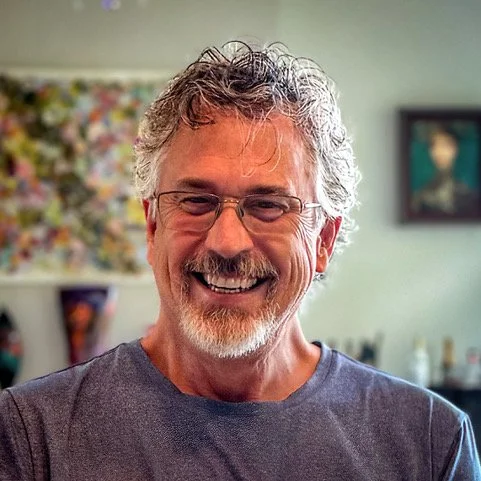
As an artist and photographer with nearly four decades of experience in the graphics field, Rick Stringer brings a unique fusion of creative vision and professional skill. His passion is empowering businesses and individuals by combining the art of illustration with the power of photography, crafting visual stories that stand out in today’s diverse landscape. Beyond photography and illustration, he offers creative consulting and Macintosh/iOS support, providing solutions that not only enhance visual appeal but also streamline technological processes.
Featured Advertisers

Custom Apparel & Accessories by Virtue
Whether you're promoting your business or expanding your brand, Virtue has you covered.
Squarespace for easy-to-manage websites
There's a reason why we've been building websites with Squarespace for almost 10 years!
Earn 15k AMEX Membership Rewards Points
From bulk purchases to managing your cash flow needs, use AMEX Blue Business® Plus.
Disclaimer: This post contains affiliate links. If you make a purchase, we may receive a commission at no extra cost to you.